


Tejal Patel has spent her career inside some of the world’s most influential brands, from Virgin and the BBC to Microsoft, Nokia and Cisco. In this episode, she explains the simple truth many B2B organisations overlook. You cannot innovate if your foundations are broken.
Tejal shares how easy it is for teams to overengineer marketing, lose sight of customers and gravitate toward rational messaging while ignoring emotion, even though every B2B buyer is still a human being.
She talks openly about the gaps she discovered when moving from B2C into B2B, the absence of customer research in large enterprises and the over rotation on technology instead of customer insight. She reflects on the relationship between sales and marketing, the need for marketing teams to raise their ambition and why proving value internally is just as important as storytelling externally. Tejal also explores how to use AI with purpose, not hype, and why human judgement can never be removed from the process.
A clear reminder that before you chase new technologies, you must understand your customers, simplify your marketing and get the basics right.


Abdul Khaled’s career didn't follow a straight line. He moved from contract work to shaping major digital and CX transformations, learning along the way that impact does not come from titles or long term plans, it comes from knowing your strengths and using them with intention.
In this episode, Abdul talks about finding his superpower, how contracting compressed decades of learning into a few intense years, and why emotional intelligence became the skill that unlocked his leadership style.
He explains how thought leadership can shift the perception of an entire brand when it is rooted in real change rather than rhetoric, and why organisations must prove disruption instead of simply claiming it. Abdul shares stories from energy, fintech and beyond, showing how authentic ideas, delivered through action, build trust at scale and create opportunities no strategy document could predict.
This is a conversation about confidence, contribution and momentum, and about why the future belongs to leaders who look forward, not back.
Tim McIvor has spent more than twenty years helping organisations understand what customers actually value and, more importantly, what they will reject without hesitation. In this episode, he explains why successful transformation is rarely about technology and almost always about empathy, curiosity and a culture that listens.
Tim reflects on lessons from Trainline, River Island, Hobbycraft and Magnet Kitchens, and how working with Biglight helped him challenge assumptions and bring the outside view into the organisation. He talks about how to anticipate customer needs, how to break through organisational bias and why culture is often the deciding factor in whether change lands or fails.
Practical, grounded and full of lived experience, Tim offers a clear view of how to stay one step ahead of customers and competition by understanding motivation, removing friction and creating teams that keep moving forward.
Ed Soo Hoo has spent twenty five years in global technology roles, yet the thread that runs through his career is not hardware or strategy, it is storytelling.
In this episode, he explains how finding his voice changed the trajectory of his life and why story, not data, is often the thing that unlocks curiosity, trust and transformation.
Ed shares how a childhood need to be heard became a lifelong skill, why he once abandoned a corporate slide deck minutes before a keynote, and how storytelling can take someone from fear to fearlessness through practice and reflection. He does not see storytelling as persuasion, he sees it as an invitation for people to look at themselves differently and discover something they had not seen before.
For B2B leaders navigating complexity, Ed offers a reminder that influence does not come from frameworks or channels, it comes from resonance, from knowing yourself well enough to speak with clarity, colour and confidence.
Adam Collett’s route into digital transformation didn’t begin in technology, it began in marketing, where he learned how customers think, how propositions land, and how measurable impact drives growth.
That background shaped the work he later led at Brakes, now part of Sysco GB, where he partnered with Biglight to reimagine the digital experience. The collaboration helped the business challenge its assumptions, rethink customer journeys and build a far more intuitive, content‑rich platform.
In this episode, Adam reflects on how marketing fundamentals, customer insight, clarity of proposition, and the discipline of knowing what truly drives the economic engine remain the backbone of B2B change. He talks about the shift from a transactional ordering site to a digital shopfront customers actually want to use, the internal conversations needed to overcome resistance, and why understanding the customer better than anyone else is still the most powerful lever in B2B.
What comes through is a practical, grounded view of transformation: start with the customer, stay close to the numbers, and surround yourself with partners who help you see what you can’t see alone.

MQ Qureshi has spent his life navigating complexity, from architecture to digital, leading transformation inside companies as varied as Ford and McDonald’s. In this episode, he talks about the moments that shaped him, and why B2B remains one of the most fascinating and challenging spaces to transform.
MQ explains why B2B complexity humbles even experienced digital leaders, how resistance to change shows up in different forms, and why understanding someone’s pressures and motivations matters more than any roadmap. He talks about the dangers of building for “today only,” the traps leaders fall into when change feels risky, and the mindset he uses to keep teams focused on the future: solve the real problem, not the one you wrote down first.
What emerges is a candid, grounded view of transformation from someone who has lived it across industries, a reminder that lasting change happens when technology, process and people move together, not in isolation.
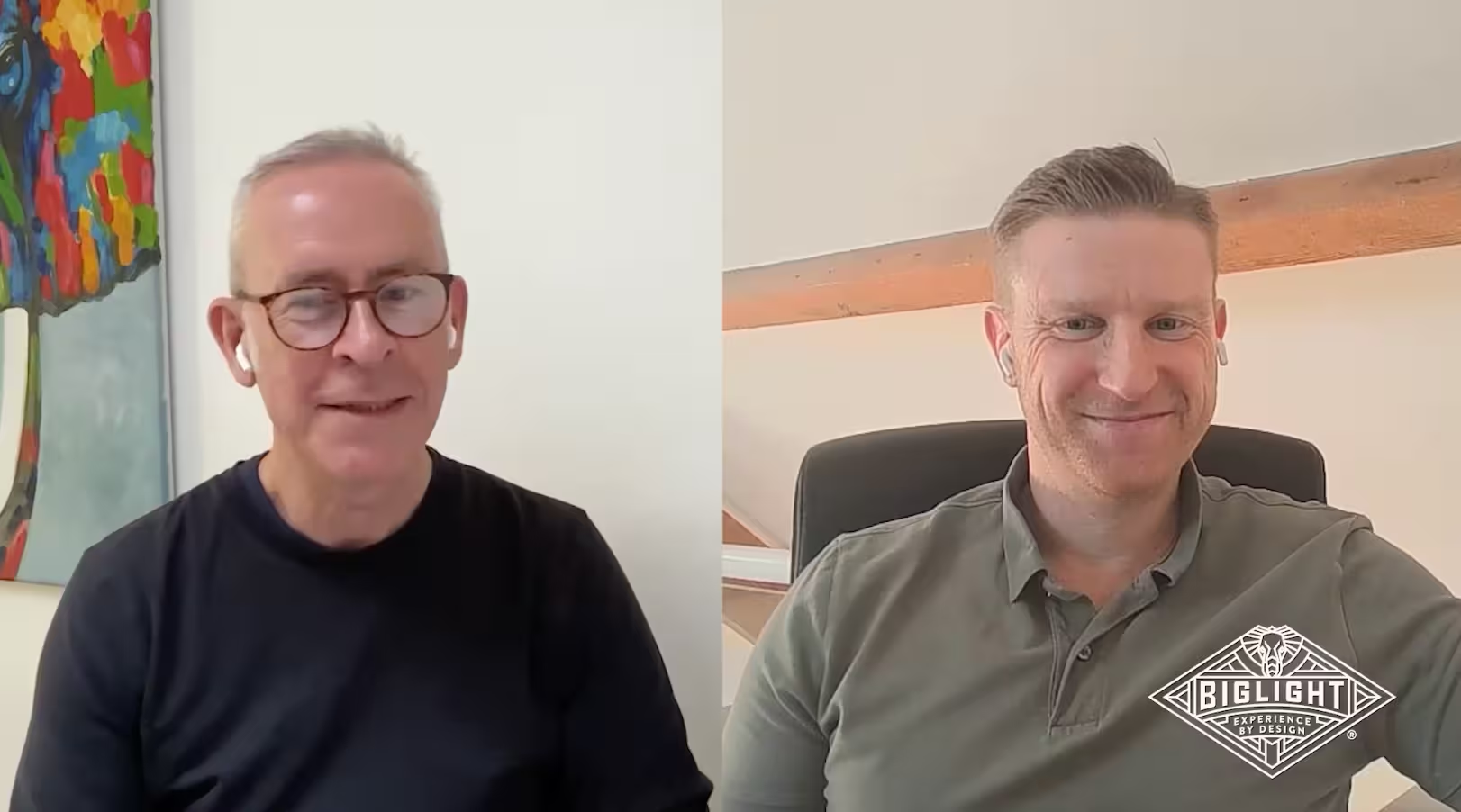
Steve Bloodworth didn’t plan to spend his career fixing product data and content. He left university wanting to write ads, stumbled into Caterpillar via a neighbour’s recommendation, and ended up becoming a Six Sigma black belt.
That mix of creativity and discipline now underpins how he thinks about digital: if the content is wrong, nothing else really works.
In this episode, Steve tells the story of how he’s used content to unlock growth at RS Components, Nisbets, AstraZeneca and now ERIKS. From a photography backlog that would have taken seven years to clear, to a “giant teapot” that turned out to be ten lids, to a bearing listed as the size of Big Ben, he shows how small errors destroy trust and conversion and how structured problem‑solving can put it right.
What comes through is a simple philosophy: understand what customers are actually trying to do, use data to find where you’re letting them down, and fix those journeys first. Technology matters, but Steve is clear that change is mostly about people, process and persuading leaders to care about the details customers see every day.
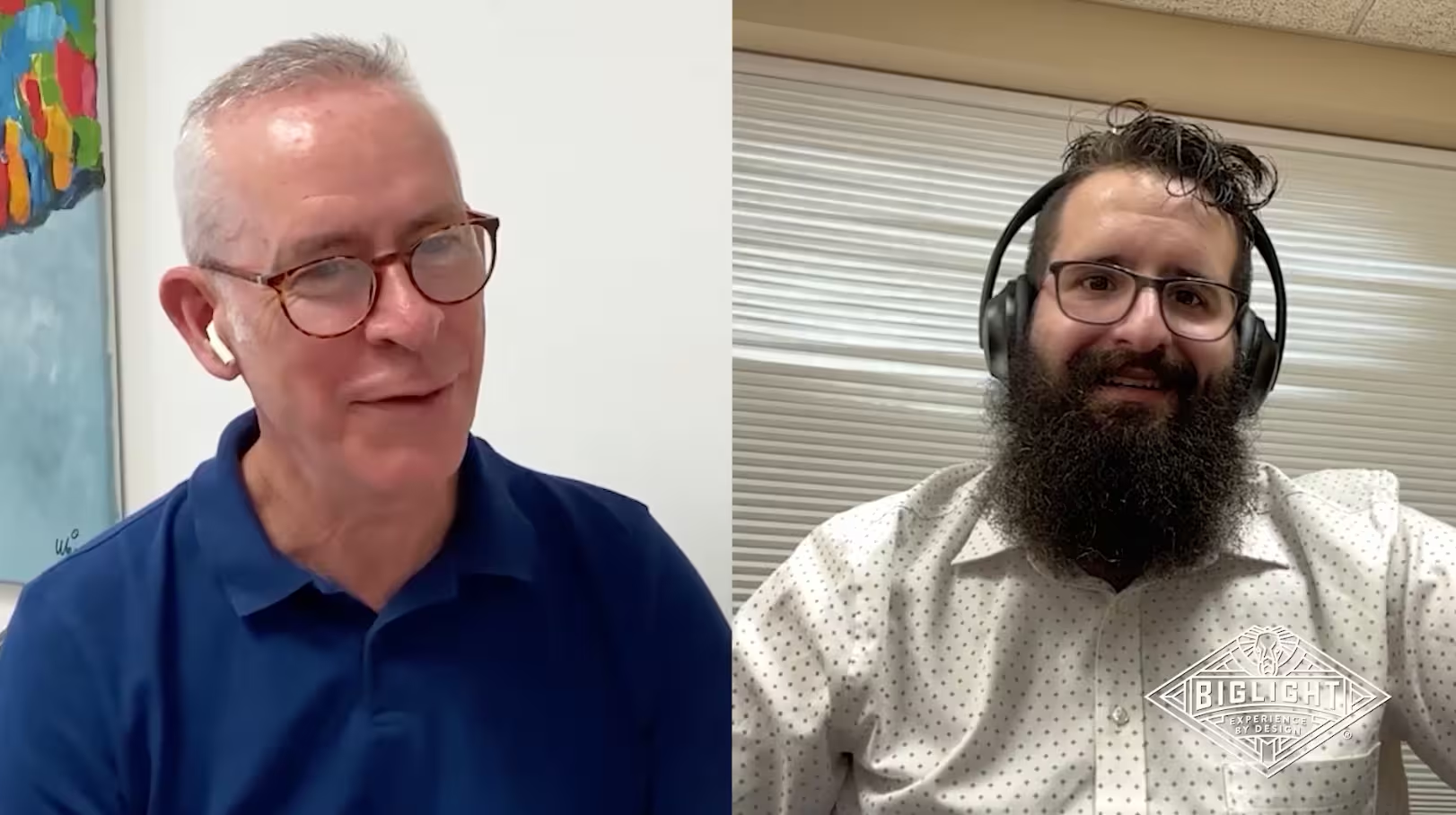
Justin Rinaldi’s journey from minor league baseball photographer to leading B2B marketer gives him a unique lens on how customer behaviour has changed.
Now director of marketing and ecommerce at Safety Speed Manufacturing, he has tripled online revenue by combining data discipline with a deep understanding of how people consume information.
In this episode, Justin explains how the media landscape has shifted since 2020, why major platforms now function as ad‑delivery networks, and what that means for B2B marketers trying to earn attention. He shares why video is outperforming all other formats for customer education, how AI‑driven discovery is reshaping search behaviour, and why brand loyalty is increasingly built long before a product is held in someone’s hands.
Justin’s approach is grounded and practical, identifying the gaps customers experience, creating short, high‑value videos to close them, and using data to influence decisions across the organisation. His view is clear: marketers who adapt quickly, test small and build around real user needs will thrive in the new attention economy.